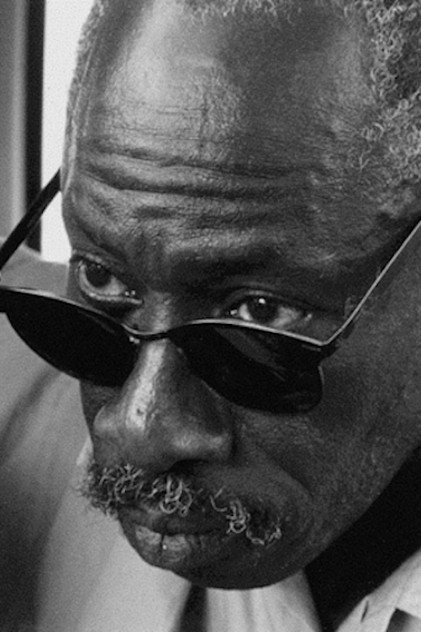
Samba Félix Ndiaye
- Known for
- Directing
- Born
- March 6, 1945
- Died
- November 6, 2009
- Birthplace
- Dakar, Senegal
Samba Félix Ndiaye was born in 1945 in Dakar, Senegal. He earned a master's degree in cinema from the University of Paris VIII in France and went on to study cinematography and editing at the Institut Louis Lumière in Paris. He also pursued studies in ethnopsychiatry and trained in law and economics in Dakar. His first film, "Perantal" (1974), established him as a sensitive documentary filmmaker committed to respecting cultures and traditions. "Geti Tey" (1978) is notable for the way it aligns the artisanal fishing practices it depicts with the rhythm of the ocean. The five-part series "Le Trésor des poubelles" (1989)—"The Treasure of the Trash Cans"—captures, with almost no commentary, the magic of transformation inherent in the art of recycling: aquariums made from old glass carboys in "Aqua"; small suitcases fashioned from tomato sauce tins in "Diplomate à la tomate"; kitchen utensils cast from the aluminum of old engines in "Teug"; gold dust discarded by jewelers in "Les Chutes de Ngalam"; and trunks made from metal drums in "Les Malles". Ndiaye explored African forms of resistance in "Amadou Diallo, un peintre sous verre" (1992), "Dakar-Bamako" (1992), and finally in "Ngor, l’esprit des lieux" (1994), a film about the only village that successfully stood up to Dakar’s urban planners. The filmmaker behind "Lettre à Senghor" (1998), "Nataal" (2001), and "Rwanda, pour mémoire" (2003), Ndiaye examined the state of African nations since independence in his final film, "Questions à la terre natale" (2008). He passed away on Friday, November 6, 2009, in Dakar, Senegal.Read moreHide biography
Samba Félix Ndiaye was born in 1945 in Dakar, Senegal. He earned a master's degree in cinema from the University of Paris VIII in France and went on to study cinematography and editing at the Institut Louis Lumière in Paris. He also pursued studies in ethnopsychiatry and trained in law and economics in Dakar. His first film, "Perantal" (1974), established him as a sensitive documentary filmmaker committed to respecting cultures and traditions. "Geti Tey" (1978) is notable for the way it aligns the artisanal fishing practices it depicts with the rhythm of the ocean. The five-part series "Le Trésor des poubelles" (1989)—"The Treasure of the Trash Cans"—captures, with almost no commentary, the magic of transformation inherent in the art of recycling: aquariums made from old glass carboys in "Aqua"; small suitcases fashioned from tomato sauce tins in "Diplomate à la tomate"; kitchen utensils cast from the aluminum of old engines in "Teug"; gold dust discarded by jewelers in "Les Chutes de Ngalam"; and trunks made from metal drums in "Les Malles". Ndiaye explored African forms of resistance in "Amadou Diallo, un peintre sous verre" (1992), "Dakar-Bamako" (1992), and finally in "Ngor, l’esprit des lieux" (1994), a film about the only village that successfully stood up to Dakar’s urban planners. The filmmaker behind "Lettre à Senghor" (1998), "Nataal" (2001), and "Rwanda, pour mémoire" (2003), Ndiaye examined the state of African nations since independence in his final film, "Questions à la terre natale" (2008). He passed away on Friday, November 6, 2009, in Dakar, Senegal.
Known for

Credits
- Questions to the native land
Questions to the native land
Movie2006
Director

Rwanda For Memory
Movie2003
Director
- Un fleuve dans la tête
Un fleuve dans la tête
Movie1998
Director

Lettre à Senghor
Movie1997TMDB 9.0
Director
- Cinés d'Afrique
Cinés d'Afrique
Movie1993
Director

Dakar-Bamako
Movie1992
Director

Ngor, l'esprit des lieux
Movie1991
Director

Les Malles
Movie1989
Director

Treasures from the Trash
Movie1989
Director

Les chutes de Ngalam
Movie1989
Director

Teug, chaudronnerie d'art
Movie1989
Director

Diplomate à la tomate
Movie1989
Director

Aqua
Movie1989
Director
- Geti Tey
Geti Tey
Movie1978
Director