
Montserrat Caballé
- Known for
- Acting
- Born
- April 12, 1933
- Died
- October 6, 2018
- Birthplace
- Barcelona, Cataluña, Spain
Montserrat Caballé i Folch or Folc (full name: María de Montserrat Bibiana Concepción Caballé i Folch (12 April 1933 – 6 October 2018), known simply as Montserrat Caballé, was a Catalan Spanish operatic soprano. She sang a wide variety of roles, but is best known as an exponent of the works of Verdi and of the bel canto repertoire, notably the works of Rossini, Bellini, and Donizetti. She was noticed internationally when she stepped in for a performance of Donizetti's Lucrezia Borgia at Carnegie Hall in 1965, and then appeared at leading opera houses. Her voice was described as pure but powerful, with superb control of vocal shadings and exquisite pianissimo. Caballé became popular to non-classical music audiences in 1987, when she recorded, at the request of the International Olympic Committee, "Barcelona", a duet with Freddie Mercury, which became an official theme song for the 1992 Olympic Games. She received several international awards and also Grammy Awards for a number of her recordings. Caballé was born in Barcelona on 12 April 1933. Her family was of humble financial circumstances due to the Civil War. She studied music at the Liceu Conservatory, and singing technique with Napoleone Annovazzi, Eugenia Kemény and Conchita Badía. She graduated with a gold medal in 1954. She subsequently moved to Basel, Switzerland, where she made her professional debut in 1956 as a last minute replacement as Mimì in Puccini's La bohème. She became part of the Basel Opera company between 1957 and 1959, singing a repertoire that included Mozart (Erste Dame in Die Zauberflöte) and Strauss (Salome) in German, unusual for Spanish singers, but which proved useful for her next engagement at the Bremen Opera (1959–1962). In 1961, she starred as Iphigénie in Gluck's Iphigénie en Tauride at the National Theatre of S. Carlos in Lisbon, alongside Raymond Wolansky, Jean Cox, Paul Schöffler and others. In 1962, Caballé returned to Barcelona and debuted at the Liceu, singing the title role in Strauss's Arabella. From the fall of 1962 through the spring of 1963 she toured Mexico, at one point singing the title role in Massenet's Manon at the Palacio de Bellas Artes. This was followed by several more successful appearances at the Liceu in 1963. Caballé's international breakthrough came in 1965 when she replaced a pregnant Marilyn Horne in a semi-staged performance of Donizetti's Lucrezia Borgia at New York's Carnegie Hall, which earned her a 25-minute standing ovation. While this was her first engagement in a bel canto opera and she had to learn the role in less than one month, her performance made her famous throughout the opera world. Later that year, Caballé made her debut at the Glyndebourne Festival singing her first Marschallin in Richard Strauss' Der Rosenkavalier and portraying the role of Countess Almaviva in Mozart's Le nozze di Figaro. ... Source: Article "Montserrat Caballé" from Wikipedia in English, licensed under CC-BY-SA 3.0.Read moreHide biography
Montserrat Caballé i Folch or Folc (full name: María de Montserrat Bibiana Concepción Caballé i Folch (12 April 1933 – 6 October 2018), known simply as Montserrat Caballé, was a Catalan Spanish operatic soprano. She sang a wide variety of roles, but is best known as an exponent of the works of Verdi and of the bel canto repertoire, notably the works of Rossini, Bellini, and Donizetti. She was noticed internationally when she stepped in for a performance of Donizetti's Lucrezia Borgia at Carnegie Hall in 1965, and then appeared at leading opera houses. Her voice was described as pure but powerful, with superb control of vocal shadings and exquisite pianissimo. Caballé became popular to non-classical music audiences in 1987, when she recorded, at the request of the International Olympic Committee, "Barcelona", a duet with Freddie Mercury, which became an official theme song for the 1992 Olympic Games. She received several international awards and also Grammy Awards for a number of her recordings. Caballé was born in Barcelona on 12 April 1933. Her family was of humble financial circumstances due to the Civil War. She studied music at the Liceu Conservatory, and singing technique with Napoleone Annovazzi, Eugenia Kemény and Conchita Badía. She graduated with a gold medal in 1954. She subsequently moved to Basel, Switzerland, where she made her professional debut in 1956 as a last minute replacement as Mimì in Puccini's La bohème. She became part of the Basel Opera company between 1957 and 1959, singing a repertoire that included Mozart (Erste Dame in Die Zauberflöte) and Strauss (Salome) in German, unusual for Spanish singers, but which proved useful for her next engagement at the Bremen Opera (1959–1962). In 1961, she starred as Iphigénie in Gluck's Iphigénie en Tauride at the National Theatre of S. Carlos in Lisbon, alongside Raymond Wolansky, Jean Cox, Paul Schöffler and others. In 1962, Caballé returned to Barcelona and debuted at the Liceu, singing the title role in Strauss's Arabella. From the fall of 1962 through the spring of 1963 she toured Mexico, at one point singing the title role in Massenet's Manon at the Palacio de Bellas Artes. This was followed by several more successful appearances at the Liceu in 1963. Caballé's international breakthrough came in 1965 when she replaced a pregnant Marilyn Horne in a semi-staged performance of Donizetti's Lucrezia Borgia at New York's Carnegie Hall, which earned her a 25-minute standing ovation. While this was her first engagement in a bel canto opera and she had to learn the role in less than one month, her performance made her famous throughout the opera world. Later that year, Caballé made her debut at the Glyndebourne Festival singing her first Marschallin in Richard Strauss' Der Rosenkavalier and portraying the role of Countess Almaviva in Mozart's Le nozze di Figaro. ... Source: Article "Montserrat Caballé" from Wikipedia in English, licensed under CC-BY-SA 3.0.
Known for
Credits

Never Boring - The videos
Movie2019TMDB 8.3
Self (archive footage)

Vangelis and the Journey To Ithaka
Movie2013TMDB 7.5
Self

Conxita Badia no existeix
Movie2012
Montserrat Caballé
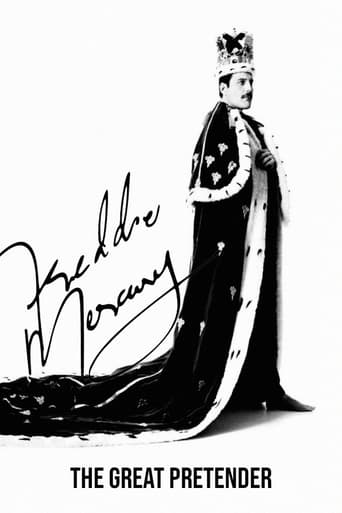
Freddie Mercury: The Great Pretender
Movie2012TMDB 7.3
Self
Savis i sàvies
TV2008
Self - Interviewee · 1 ep
- Die schönsten Weihnachts-Hits
Die schönsten Weihnachts-Hits
TV2006
Self · 1 ep
- Willkommen bei Carmen Nebel
Willkommen bei Carmen Nebel
TV2004TMDB 4.0
Self · 2 eps

Caballe beyond music
Movie2003TMDB 9.0
Herself

Freddie Mercury: The Untold Story
Movie2000TMDB 7.7
Self

Beckmann
TV1999TMDB 4.5
Self · 1 ep
- Die Johannes B. Kerner Show
Die Johannes B. Kerner Show
TV1998TMDB 7.5
Self · 1 ep
Die Harald Schmidt Show
TV1995TMDB 7.4
Self · 1 ep
- Versteckte Kamera
Versteckte Kamera
TV1995
Self · 1 ep

Lo + plus
TV1995
Self - Guest · 1 ep

alfredissimo! Kochen mit Bio
TV1994TMDB 6.0
Self · 1 ep
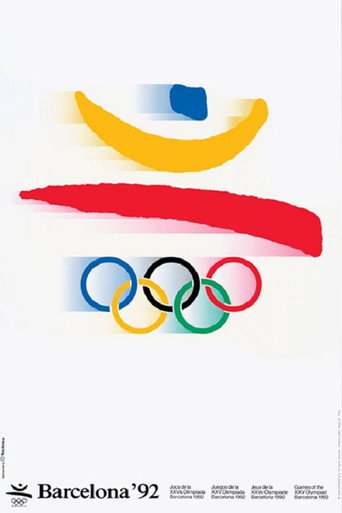
Barcelona '92 Olympic Games Inauguration Ceremony
Movie1992
Self
- Musik liegt in der Luft
Musik liegt in der Luft
TV1991
Self - Singer · 1 ep
- Flitterabend
Flitterabend
TV1988TMDB 7.0
Self - Singer · 2 eps

Freddie Mercury & Montserrat Caballé - La Nit
Movie1988
Self - Performer

Le monde est à vous
TV1987
Self · 1 ep

Romanza final (Gayarre)
Movie1986TMDB 6.2
Soprano
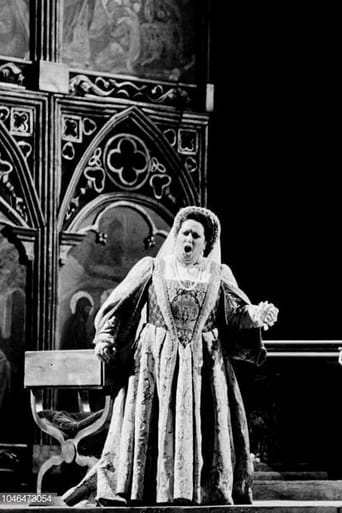
Verdi: Simon Boccanegra
Movie1985
Maria Boccanegra
- Melodien für Millionen
Melodien für Millionen
TV1985
Self · 1 ep
- Goldene Kamera
Goldene Kamera
TV1984TMDB 5.7
Self · 1 ep

Hérodiade - Gran Teatro del Liceo
Movie1984TMDB 9.0
Salomé
Champs-Elysées
TV1982TMDB 6.8
Self · 1 ep

Wetten, dass..?
TV1981TMDB 5.6
Self · 4 eps

Verstehen Sie Spaß?
TV1980TMDB 4.7
Self · 1 ep
The South Bank Show
TV1978TMDB 5.6
1 ep
General Report
Movie1977TMDB 6.7
Self - Opera Singer

Norma
Movie1974TMDB 10.0
Norma
Le Grand Échiquier
TV1972TMDB 8.0
Self, Self - Main Guest · 3 eps
Bambi
TV1948TMDB 9.0
Self · 1 ep

José Carreras Collection: Montserrat Caballé & José Carreras
Movie

Cilea - Adriana Lecouvreur - Caballe, Cossotto, Carreras (NHK 1976)
Movie