Jean Pélégri
- Known for
- Acting
- Born
- June 20, 1920
- Died
- September 24, 2003
- Birthplace
- Bougara, Algeria
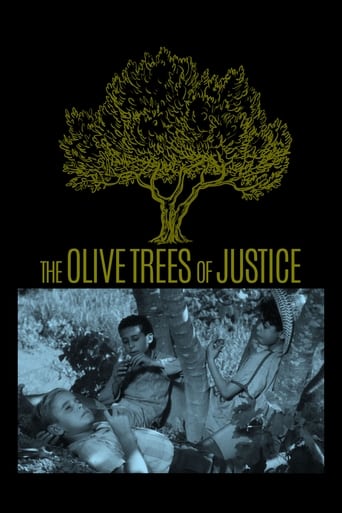
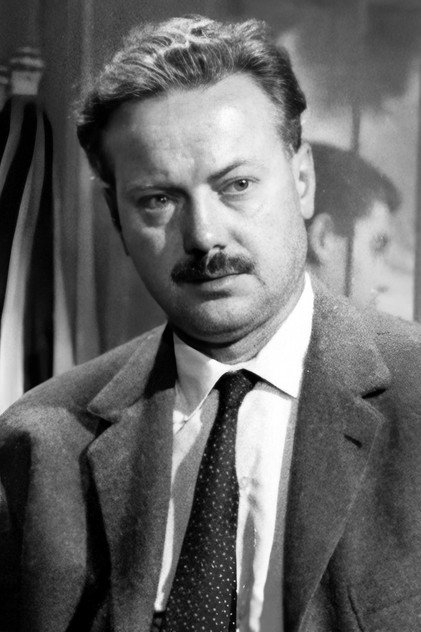
Jean Pélégri (arabic : جان بيليغري), born in Bougara (formerly Rovigo), Algeria, on June 20, 1920, and who died in Paris on September 24, 2003, was a French novelist and poet. A writer and teacher of literature, he was very close to Algerian writers who wrote in French—such as Mourad Bourboune, Jean Sénac, and Mohamed Dib. Beginning in the early 1950s, his work was rooted in the reality of Algeria, straddling his own background—that of the European settlers in Algeria—and the broader Algerian reality: the resistance against colonization, a cause he soon embraced. His body of work reflects this awakening—a commitment to a people who, though exploited, remained combative, and, above all, a commitment to the Algerian land itself, freed from colonialism and envisioned by him as a pluralistic society. His writing, profoundly Algerian, belongs to an experimental "bridging literature"—a body of work forged within the contradictions of colonialism, rich in a combative, popular, and collective plurality. He is best known for *Les Oliviers de la Justice* (The Olive Trees of Justice), which won the *Grand Prix catholique de littérature* in 1960, and *Le Maboul* (1963). Both novels, inspired by the author’s own life, trace Pélégri’s evolving perspective on the politics of the national liberation struggle, the colonial legacy, and, crucially, the nature of Algerian literature. He also served as a screenwriter, dialogue writer, and actor for the film adaptation of *Les Oliviers de la Justice*, directed by James Blue, which won the *Prix des Écrivains de cinéma et de télévision* at the 1962 Cannes Film Festival. Jean Pélégri was also a teacher at the Lycée Buffon (in Paris’s 15th arrondissement), where, in addition to teaching French, he introduced his students to the world of theater. "No other French writer from Algeria—a *pied-noir*, as the term is foolishly used today—has embraced the entirety of Algeria, just as it has always been, in the way he did. Perhaps, at a stretch, one might mention the poet Jean Sénac. But neither Gabriel Audisio, nor Emmanuel Roblès, nor Jules Roy, nor Albert Camus felt—as Jean Pélégri did, with such natural ease—that he was a son of all the Algerias: Arab, Berber, Spanish, and French. From *Les Oliviers de la justice* to *Le Maboul*, he gives voice to a true *cante jondo* of rural Algeria, in all its baroque complexity. *Le Maboul* stands alongside Kateb Yacine’s *Nedjma* as the only Faulknerian novel in our literature." — Jean Daniel, "Pélégri the Algerian," *Le Nouvel Observateur*, Paris, October 8, 2003.Read moreHide biography
Jean Pélégri (arabic : جان بيليغري), born in Bougara (formerly Rovigo), Algeria, on June 20, 1920, and who died in Paris on September 24, 2003, was a French novelist and poet. A writer and teacher of literature, he was very close to Algerian writers who wrote in French—such as Mourad Bourboune, Jean Sénac, and Mohamed Dib. Beginning in the early 1950s, his work was rooted in the reality of Algeria, straddling his own background—that of the European settlers in Algeria—and the broader Algerian reality: the resistance against colonization, a cause he soon embraced. His body of work reflects this awakening—a commitment to a people who, though exploited, remained combative, and, above all, a commitment to the Algerian land itself, freed from colonialism and envisioned by him as a pluralistic society. His writing, profoundly Algerian, belongs to an experimental "bridging literature"—a body of work forged within the contradictions of colonialism, rich in a combative, popular, and collective plurality. He is best known for *Les Oliviers de la Justice* (The Olive Trees of Justice), which won the *Grand Prix catholique de littérature* in 1960, and *Le Maboul* (1963). Both novels, inspired by the author’s own life, trace Pélégri’s evolving perspective on the politics of the national liberation struggle, the colonial legacy, and, crucially, the nature of Algerian literature. He also served as a screenwriter, dialogue writer, and actor for the film adaptation of *Les Oliviers de la Justice*, directed by James Blue, which won the *Prix des Écrivains de cinéma et de télévision* at the 1962 Cannes Film Festival. Jean Pélégri was also a teacher at the Lycée Buffon (in Paris’s 15th arrondissement), where, in addition to teaching French, he introduced his students to the world of theater. "No other French writer from Algeria—a *pied-noir*, as the term is foolishly used today—has embraced the entirety of Algeria, just as it has always been, in the way he did. Perhaps, at a stretch, one might mention the poet Jean Sénac. But neither Gabriel Audisio, nor Emmanuel Roblès, nor Jules Roy, nor Albert Camus felt—as Jean Pélégri did, with such natural ease—that he was a son of all the Algerias: Arab, Berber, Spanish, and French. From *Les Oliviers de la justice* to *Le Maboul*, he gives voice to a true *cante jondo* of rural Algeria, in all its baroque complexity. *Le Maboul* stands alongside Kateb Yacine’s *Nedjma* as the only Faulknerian novel in our literature." — Jean Daniel, "Pélégri the Algerian," *Le Nouvel Observateur*, Paris, October 8, 2003.