
Steve Reich
- Known for
- Sound
- Born
- October 3, 1936
- Birthplace
- New York City, New York, USA
Steve Reich was born on October 3, 1936 in New York City, New York, USA as Stephen Michael Reich. Stephen Michael Reich (born October 3, 1936) is an American composer who, along with La Monte Young, Terry Riley, and Philip Glass, pioneered minimal music in the mid to late 1960s. Reich's style of composition influenced many composers and groups. His innovations include using tape loops to create phasing patterns (for example, his early compositions It's Gonna Rain and Come Out), and the use of simple, audible processes to explore musical concepts (for instance, Pendulum Music and Four Organs). These compositions, marked by their use of repetitive figures, slow harmonic rhythm and canons, have significantly influenced contemporary music, especially in the US. Reich's work took on a darker character in the 1980s with the introduction of historical themes as well as themes from his Jewish heritage, notably Different Trains. Writing in The Guardian, music critic Andrew Clements suggested that Reich is one of "a handful of living composers who can legitimately claim to have altered the direction of musical history".[6] The American composer and critic Kyle Gann has said that Reich "may ... be considered, by general acclamation, America's greatest living composer". From Wikipedia, the free encyclopediaRead moreHide biography
Steve Reich was born on October 3, 1936 in New York City, New York, USA as Stephen Michael Reich. Stephen Michael Reich (born October 3, 1936) is an American composer who, along with La Monte Young, Terry Riley, and Philip Glass, pioneered minimal music in the mid to late 1960s. Reich's style of composition influenced many composers and groups. His innovations include using tape loops to create phasing patterns (for example, his early compositions It's Gonna Rain and Come Out), and the use of simple, audible processes to explore musical concepts (for instance, Pendulum Music and Four Organs). These compositions, marked by their use of repetitive figures, slow harmonic rhythm and canons, have significantly influenced contemporary music, especially in the US. Reich's work took on a darker character in the 1980s with the introduction of historical themes as well as themes from his Jewish heritage, notably Different Trains. Writing in The Guardian, music critic Andrew Clements suggested that Reich is one of "a handful of living composers who can legitimately claim to have altered the direction of musical history".[6] The American composer and critic Kyle Gann has said that Reich "may ... be considered, by general acclamation, America's greatest living composer". From Wikipedia, the free encyclopedia
Known for
Credits

Tribute to Steve Reich @ Présences Festival 2024
Movie2024
Original Music Composer

Les Apaches | Simon Nogueira | Johan Tonnoir | Andrea Catozzi @ Paris Sur Mesure
Movie2024
Music

Puparia
Movie2021TMDB 8.0
Music
- Riding Light
Riding Light
Movie2015TMDB 8.0
Music
- Steve Reich in Concert - Salle Pleyel 2014
Steve Reich in Concert - Salle Pleyel 2014
Movie2014
Music

Rain
Movie2014
Music

Light Motif
Movie2014TMDB 1.0
Music

C.O.G.
Movie2013TMDB 5.5
Music
- Drums
Drums
Movie2011
Music

Space Tourists
Movie2009TMDB 5.8
Music

The Dying Gaul
Movie2005TMDB 6.0
Original Music Composer
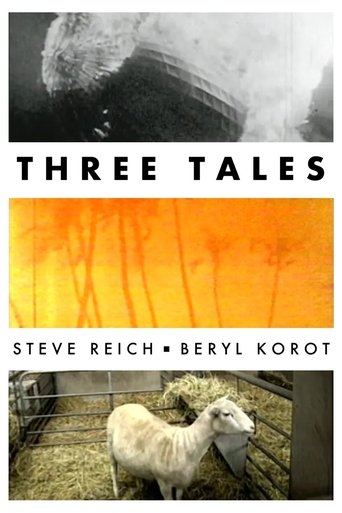
Reich: Three Tales
Movie2002TMDB 8.5
Musician, Original Music Composer
- Fase
Fase
Movie2002TMDB 6.0
Original Music Composer

Mostly Martha
Movie2001TMDB 6.7
Music

John Adams: A Portrait and A Concert of Modern American Music
Movie2000
Original Music Composer

Shadow on the Snow
Movie1992TMDB 5.0
Original Music Composer

PAPERS.
Movie1991TMDB 7.8
Music

A Few Things I Know About Miami
Movie1986
Music

Regard de ma fenêtre
Movie1974TMDB 1.0
Music
- Portraits
Portraits
Movie1972
Music

My Name Is Oona
Movie1969TMDB 5.9
Sound Designer, Original Music Composer, Thanks
Oh Dem Watermelons
Movie1966TMDB 6.1
Music
Plastic Haircut
Movie1963
Music