
Veljo Tormis
- Known for
- Sound
- Born
- August 7, 1930
- Died
- January 21, 2017
- Birthplace
- Kuusalu, Harju County, Estonia
Veljo Tormis (August 7, 1930 – January 21, 2017) was an Estonian composer, regarded as one of the great contemporary choral composers and one of the most important composers of the 20th century in Estonia. Internationally, his fame arises chiefly from his extensive body of choral music, which exceeds 500 individual choral songs, most of it a cappella. The great majority of these pieces are based on traditional ancient Estonian folksongs (regilaulud), either textually, melodically, or merely stylistically. His composition most often performed outside Estonia, Curse Upon Iron (Raua needmine) (1972), invokes ancient Shamanistic traditions to construct an allegory about the evils of war. Some of his works were banned by the Soviet government, but because folk music was fundamental to his style most of his compositions were accepted by the censors. More recently, Tormis' works have been performed and recorded by Tõnu Kaljuste with the Estonian Philharmonic Chamber Choir, and others. In the 1990s, Tormis began to receive commissions from some a cappella groups as the King's Singers and the Hilliard Ensemble. Tormis famously said of his settings of traditional melodies and verse: "It is not I who makes use of folk music, it is folk music that makes use of me." His work demonstrates his conviction that traditional Estonian and other Balto-Finnic music represents a treasure which must be guarded and nourished, and that culture may be kept alive through the medium of song.Read moreHide biography
Veljo Tormis (August 7, 1930 – January 21, 2017) was an Estonian composer, regarded as one of the great contemporary choral composers and one of the most important composers of the 20th century in Estonia. Internationally, his fame arises chiefly from his extensive body of choral music, which exceeds 500 individual choral songs, most of it a cappella. The great majority of these pieces are based on traditional ancient Estonian folksongs (regilaulud), either textually, melodically, or merely stylistically. His composition most often performed outside Estonia, Curse Upon Iron (Raua needmine) (1972), invokes ancient Shamanistic traditions to construct an allegory about the evils of war. Some of his works were banned by the Soviet government, but because folk music was fundamental to his style most of his compositions were accepted by the censors. More recently, Tormis' works have been performed and recorded by Tõnu Kaljuste with the Estonian Philharmonic Chamber Choir, and others. In the 1990s, Tormis began to receive commissions from some a cappella groups as the King's Singers and the Hilliard Ensemble. Tormis famously said of his settings of traditional melodies and verse: "It is not I who makes use of folk music, it is folk music that makes use of me." His work demonstrates his conviction that traditional Estonian and other Balto-Finnic music represents a treasure which must be guarded and nourished, and that culture may be kept alive through the medium of song.
Known for
Credits

The End of Poetry
Movie2009
Music

Autumn
Movie1990TMDB 6.0
Music
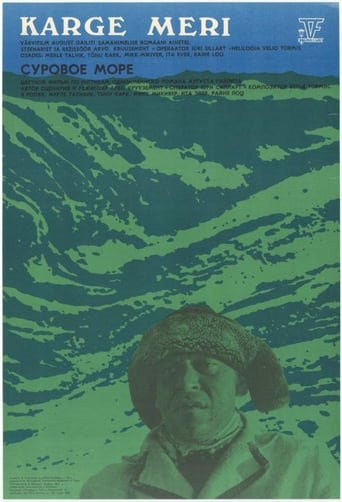
The Smacking Sea
Movie1981TMDB 7.5
Original Music Composer

Christmas in Vigala
Movie1981TMDB 6.0
Original Music Composer
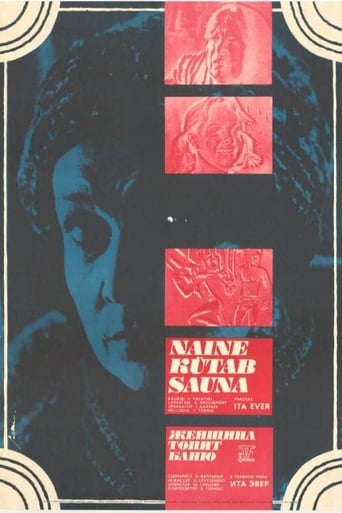
A Woman Heats the Sauna
Movie1979TMDB 5.6
Original Music Composer
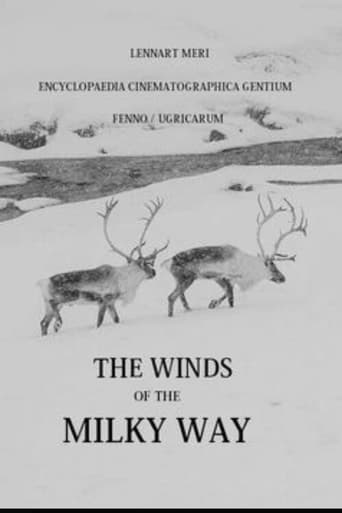
The Winds of the Milky Way
Movie1978TMDB 7.5
Music
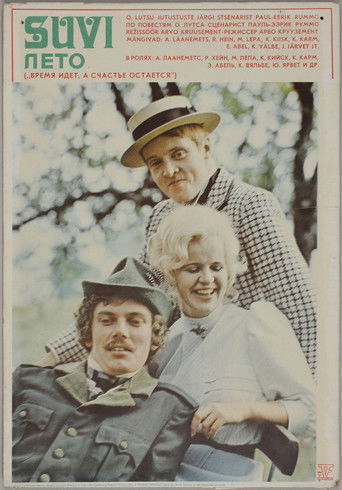
Summer
Movie1976TMDB 6.3
Music
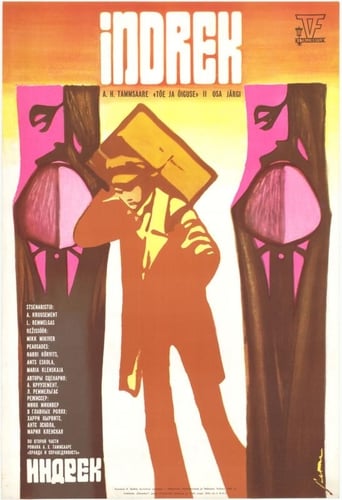
Indrek
Movie1976
Original Music Composer

Songs For Spring
Movie1975TMDB 8.0
Music

Inspiration
Movie1975TMDB 8.0
Music

Bloody John
Movie1974TMDB 8.0
Music

Woman from Kihnu
Movie1974TMDB 6.0
Music
Outlaws
TV1971
Original Music Composer · 4 eps

Spring
Movie1970TMDB 6.6
Original Music Composer
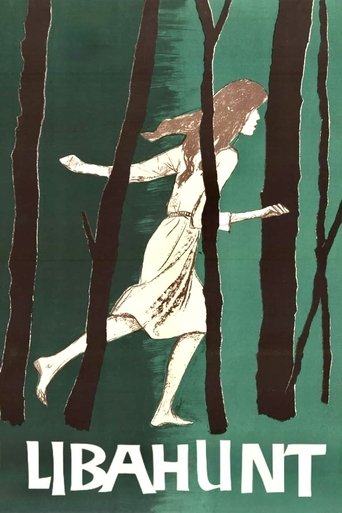
Werewolf
Movie1969TMDB 6.4
Original Music Composer

Watercolors of One Summer
Movie1967
Original Music Composer

Under the Same Roof
Movie1963TMDB 8.5
Original Music Composer