
John G. Avildsen
- Known for
- Directing
- Born
- December 21, 1935
- Died
- June 16, 2017
- Birthplace
- Oak Park, Illinois, USA
John Guilbert Avildsen (December 21, 1935 – June 16, 2017) was an American film director. He won the Academy Award for Best Director in 1977 for Rocky. Other films he directed include Joe, Save the Tiger, Fore Play, The Formula, Neighbors, For Keeps, Lean on Me, The Power of One, 8 Seconds, Inferno, Rocky V and the first three The Karate Kid films. Avildsen was born in Oak Park, Illinois, the son of Ivy (née Guilbert) and Clarence John Avildsen. He was educated at The Hotchkiss School and New York University. After starting out as an assistant director on films by Arthur Penn and Otto Preminger, John Avildsen received his first success with the low budget feature Joe (1970) which received critical acclaim for star Peter Boyle and moderate box office business. This was followed by another critical success, Save the Tiger (1973), that was nominated for three Oscars, winning Best Actor for star Jack Lemmon. Avildsen's greatest success was Rocky (1976), garnering ten Academy Award nominations and winning three, including Best Picture and Best Director. He later directed what was expected to be the series' final installment, Rocky V (1990). His other films include Cry Uncle! (1971), Neighbors (1981), The Karate Kid (1984), The Karate Kid Part II (1986), The Karate Kid Part III (1989), Lean on Me (1989) and 8 Seconds (1994). Avildsen was the original director for both Serpico (1973) and Saturday Night Fever (1977), but was fired over disputes with producers Martin Bregman and Robert Stigwood, respectively.Read moreHide biography
John Guilbert Avildsen (December 21, 1935 – June 16, 2017) was an American film director. He won the Academy Award for Best Director in 1977 for Rocky. Other films he directed include Joe, Save the Tiger, Fore Play, The Formula, Neighbors, For Keeps, Lean on Me, The Power of One, 8 Seconds, Inferno, Rocky V and the first three The Karate Kid films. Avildsen was born in Oak Park, Illinois, the son of Ivy (née Guilbert) and Clarence John Avildsen. He was educated at The Hotchkiss School and New York University. After starting out as an assistant director on films by Arthur Penn and Otto Preminger, John Avildsen received his first success with the low budget feature Joe (1970) which received critical acclaim for star Peter Boyle and moderate box office business. This was followed by another critical success, Save the Tiger (1973), that was nominated for three Oscars, winning Best Actor for star Jack Lemmon. Avildsen's greatest success was Rocky (1976), garnering ten Academy Award nominations and winning three, including Best Picture and Best Director. He later directed what was expected to be the series' final installment, Rocky V (1990). His other films include Cry Uncle! (1971), Neighbors (1981), The Karate Kid (1984), The Karate Kid Part II (1986), The Karate Kid Part III (1989), Lean on Me (1989) and 8 Seconds (1994). Avildsen was the original director for both Serpico (1973) and Saturday Night Fever (1977), but was fired over disputes with producers Martin Bregman and Robert Stigwood, respectively.
Known for


Credits
May Day x 4
Movie2026
Cinematography
The Power of One
Movie1992TMDB 7.4
Editor

Rocky V
Movie1990TMDB 5.8
Editor
The Karate Kid Part III
Movie1989TMDB 5.9
Editor

Lean On Me
Movie1989TMDB 7.3
Editor

For Keeps
Movie1988TMDB 6.5
Editor
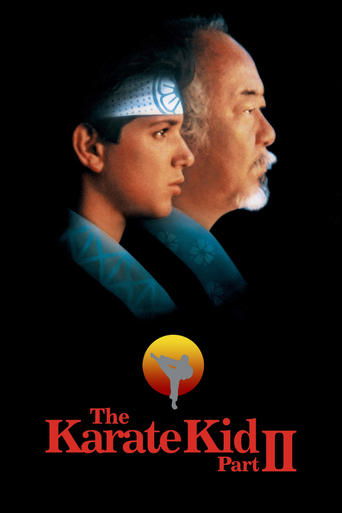
The Karate Kid Part II
Movie1986TMDB 6.3
Editor
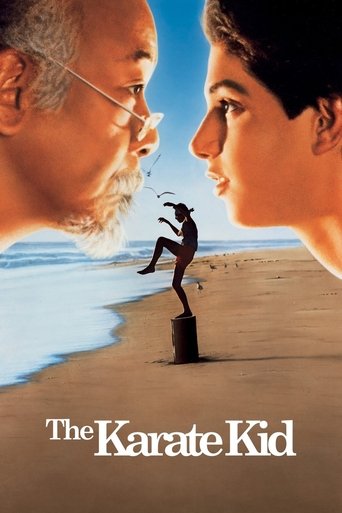
The Karate Kid
Movie1984TMDB 7.2
Editor

A Night in Heaven
Movie1983TMDB 4.5
Editor

Traveling Hopefully
Movie1982TMDB 5.8
Cinematography

Slow Dancing In The Big City
Movie1978TMDB 6.6
Editor, Camera Operator
- The Stoolie
The Stoolie
Movie1972TMDB 10.0
Cinematography

Okay Bill
Movie1971TMDB 6.0
Editor, Cinematography

Cry Uncle!
Movie1971TMDB 4.5
Director of Photography, Additional Dialogue, Editor

Guess What We Learned in School Today?
Movie1971TMDB 4.9
Director of Photography, Editor

Joe
Movie1970TMDB 6.5
Director of Photography

Out of It
Movie1969TMDB 4.3
Director of Photography